


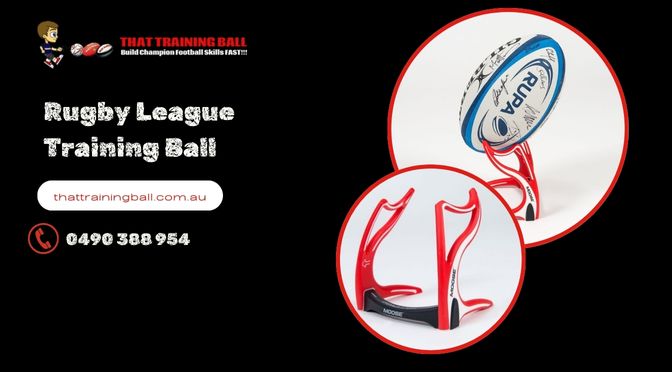
Ever fumbled a pass during a critical training drill? The ball itself could be the culprit. Mastering handling speed is crucial for any rugby player. The right training ball directly impacts your performance and skill development.
This blog explores the unique designs of both core balls. Understand how each affects your catch-and-pass techniques and on-field agility.
The Rugby League Training Ball: Built for Speed and Precision
The rugby league training ball is engineered for a faster game. Its distinct shape and feel promote quick, accurate handling.
- Slimmer Profile: The ball is more streamlined than its counterpart. This design aids one-handed carries and swift transfers.
- Pronounced Points: Sharper ends offer superior grip during speedy play-the-balls. Players can secure the ball firmly.
- Synthetic Grip: Enhanced surface materials improve control in all conditions. This supports high-tempo attacking structures.
Using this ball trains the hands for rapid, repetitive movements. It fosters quicker decision-making under defensive pressure.
The Rugby Union Training Ball: Mastering Control and Variability
The rugby union training ball is designed for a multifaceted game. It prepares players for diverse handling scenarios.
- Larger, Rounded Shape: This tests handling security thoroughly. It is essential for secure ruck and maul presentation.
- Varied Seam Construction: Different seams alter grip points and ball flight. This builds adaptability for kicking strategies and lineout throws.
- Softer Feel: Some models offer a gentler contact surface. This aids confidence in close-contact offloading skills.
Training with this ball develops comprehensive, reliable hands. It is vital for set-piece execution and tactical kicking games.
Choosing Your Tool for Handling Speed Development
Your training goals should guide your ball selection.
- For League-Specific Speed: Use the slimmer ball. It directly enhances line-breaking passing sequences.
- For Union-Specific Skills: Train with the larger ball. It builds strength for long, spiral passes.
- For Overall Proficiency: Incorporate both types carefully. This method dramatically improves general ball-handling dexterity.
Consistent practice with the correct ball is irreplaceable. It builds the muscle memory for flawless match-day performance.
Final Takeaway
Your choice of training ball fundamentally shapes your handling speed. Each ball offers unique physical and tactical challenges. Integrate the right tool into your skills training regimen. Watch your handling become faster, safer, and more automatic.
If you’re looking to invest in the right ball, turn to That Training Ball. You need a rugby league training ball or a union ball; we have the best products. Check out our website to explore our products and the prices!
FAQs
Q: Can using a heavier ball improve my passing speed?
A: Occasionally, yes. It builds passing strength. Always prioritise correct technique with standard balls first.
Q: How do wet weather balls differ in training?
A: They feature extreme grip patterns. These balls are fantastic for wet-weather handling drills.
Q: Should junior players use specific training balls?
A: Absolutely. Size-appropriate balls are critical. They ensure proper skill development from a young age.

