



The journey to becoming a skilled footballer starts with the right equipment. Many players overlook how ball size affects their training progress. Using proper gear makes a real difference in how quickly athletes develop their abilities. This guide explores why choosing the correct ball matters for serious skill improvement.
Why Ball Size Matters for Development?
The size 4 AFL women’s ball is specifically designed for optimal handling and control. Smaller hands can grip it properly, which leads to better catching technique. Players build confidence when they can securely hold the ball during training sessions.
Using an appropriately sized ball helps athletes master these key areas:
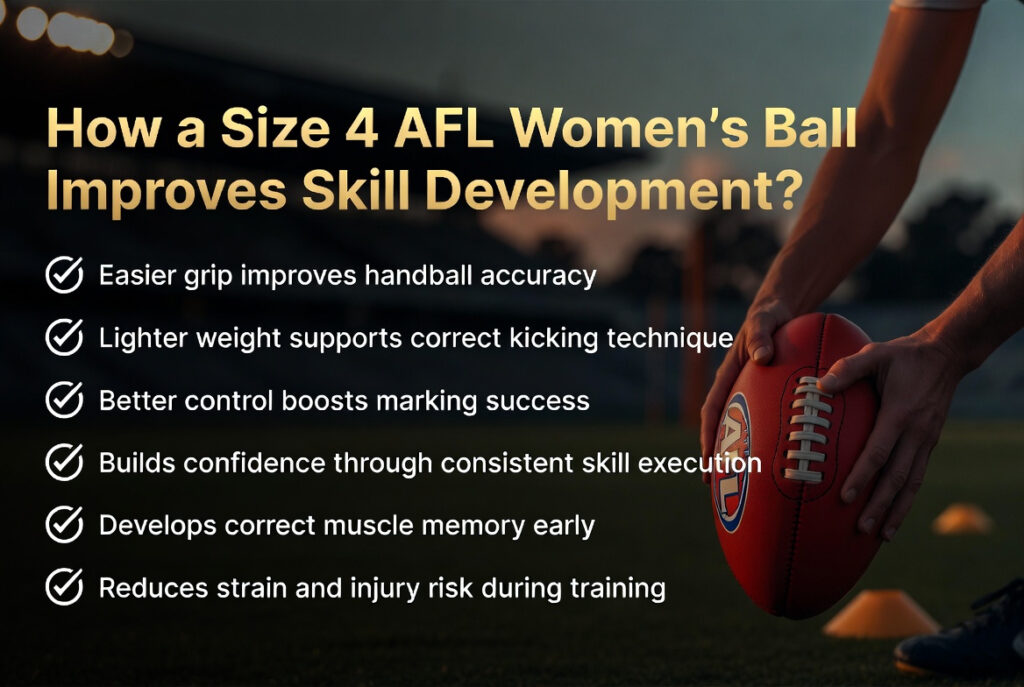
- Handball accuracy improves when players can wrap their fingers around the ball
- Kicking technique develops faster with a manageable ball weight
- Marking skills advance as players successfully catch during drills
- Ball control increases during ground work and contested situations
Enhanced Control Leads to Better Technique
When a ball fits properly in your hands, learning fundamental skills becomes easier. The size 4 AFL women’s ball weighs less than the larger alternatives. This reduced weight allows players to focus on proper form rather than struggling with bulk.
Younger athletes particularly benefit from using correctly sized equipment during their formative years. Their muscle memory develops around the right movements from the start. This foundation prevents bad habits that are difficult to correct later.
Building Confidence Through Success
Nothing motivates athletes more than seeing their own improvement. Players experience more successful catches and kicks with appropriate AFL training equipment. These small victories accumulate into genuine skill development over time.
Confidence grows when training feels achievable rather than frustrating. Athletes push themselves harder when they believe progress is possible. The right ball size removes unnecessary obstacles from the learning process.
Developing Game-Ready Skills
Match situations require split-second decisions and precise ball handling. Training with properly sized equipment prepares players for real competition pressure. The size 4 AFL women’s ball mirrors what athletes will use during actual games.
Practising with authentic gear creates realistic training conditions that translate directly to performance. Players don’t need to adjust their technique when transitioning from training to matches. This consistency accelerates overall skill development across all playing situations.
Preventing Injury and Strain
Using oversized equipment can lead to hand strain and poor throwing mechanics. Young players especially risk developing injuries when forcing their bodies to handle inappropriate gear. Correctly sized AFL training equipment protects athletes while they train hard.
Proper equipment supports healthy physical development alongside skill improvement. Players can train longer and more frequently without risking overuse injuries. This sustainable approach builds skills safely over the long term.
Conclusion
Choosing the right ball size directly impacts how quickly footballers develop their abilities. The size 4 AFL women’s ball provides the perfect foundation for serious skill improvement. Investing in quality AFL training equipment shows commitment to proper development and long-term success.
Ready to elevate your training with the right equipment? Contact That Training Ball Company today at 0490 388 954 or email sales@thattrainingball.com.au. Visit https://thattrainingball.com.au/ to explore options that support your athletic journey.
FAQs
1. What makes a size 4 ball better for skill development than larger sizes?
The size 4 ball fits smaller hands properly, allowing better grip and control. This leads to improved technique, more successful catches, and faster skill progression during training sessions.
2. At what age should players start using a size 4 AFL ball?
Players typically transition to size 4 balls around 10-12 years old or when adult-sized balls feel too large. Individual hand size matters more than age when choosing appropriate equipment.
3. Can using the wrong ball size slow down my progress?
Yes, oversized balls can hinder development by making basic skills unnecessarily difficult. Players may develop poor technique trying to compensate for equipment that doesn’t fit properly.
4. How does ball weight affect kicking technique?
Lighter balls allow players to focus on proper foot positioning and follow-through. They can complete more repetitions without fatigue, building correct kicking mechanics more effectively.
5. Will training with a size 4 ball help my match performance?
Absolutely. Training with match-appropriate equipment ensures your technique translates directly to game situations. You won’t need to adjust your skills during actual competition.
6. What specific skills improve fastest with properly sized equipment?
Handball accuracy, marking confidence, and ball control show the quickest improvement. Players can properly execute techniques when the equipment matches their physical capabilities.
7. Can adults benefit from using a size 4 ball for training?
Yes, adults with smaller hands often perform better with size 4 balls. Comfort and control matter more than arbitrary size standards for effective training.
8. How long does it take to see improvement with the right ball?
Most players notice better control within their first few training sessions. Measurable skill improvements typically appear within 4-6 weeks of consistent practice.
9. Does ball size affect injury risk during training?
Yes, oversized equipment can cause hand strain and encourage poor mechanics. Properly fitted balls reduce injury risk while supporting healthy physical development.
10. What other equipment should I consider alongside the right ball?
Quality training cones, proper footwear, and protective gear complement your ball choice. However, the ball itself remains the most critical piece for skill development.

